Our Patron: St David of Wales
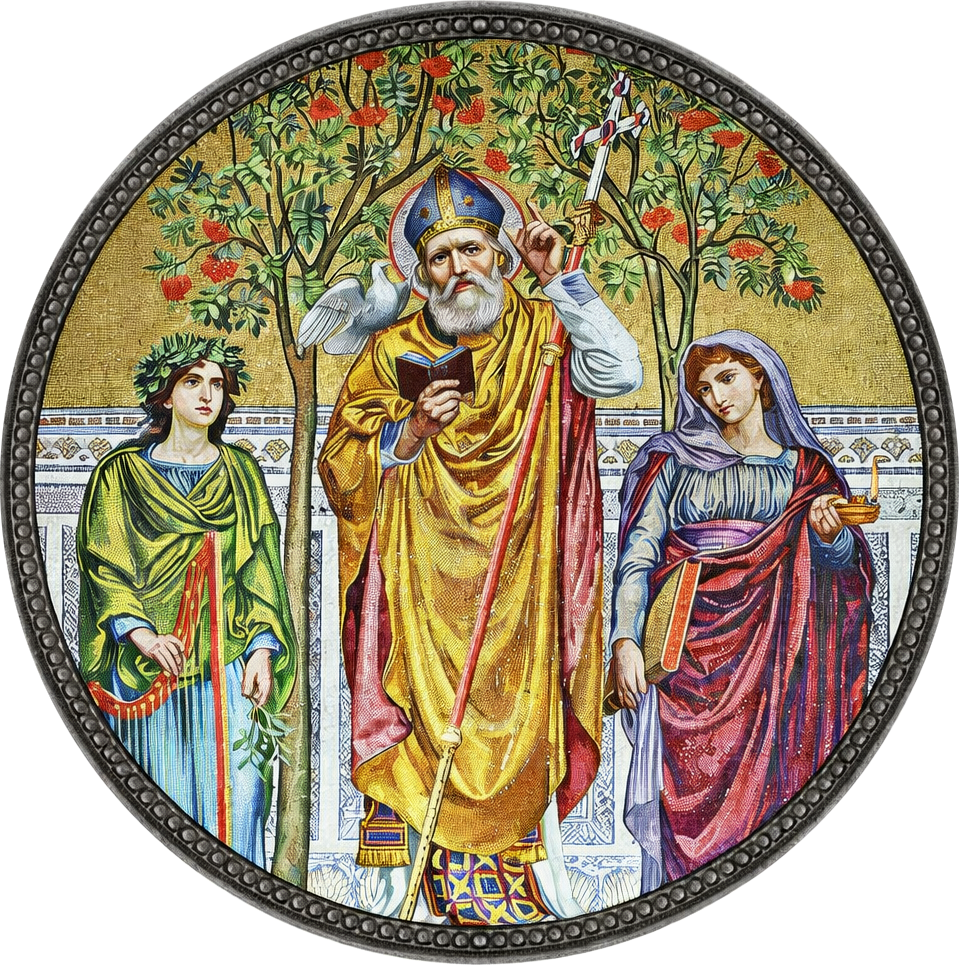
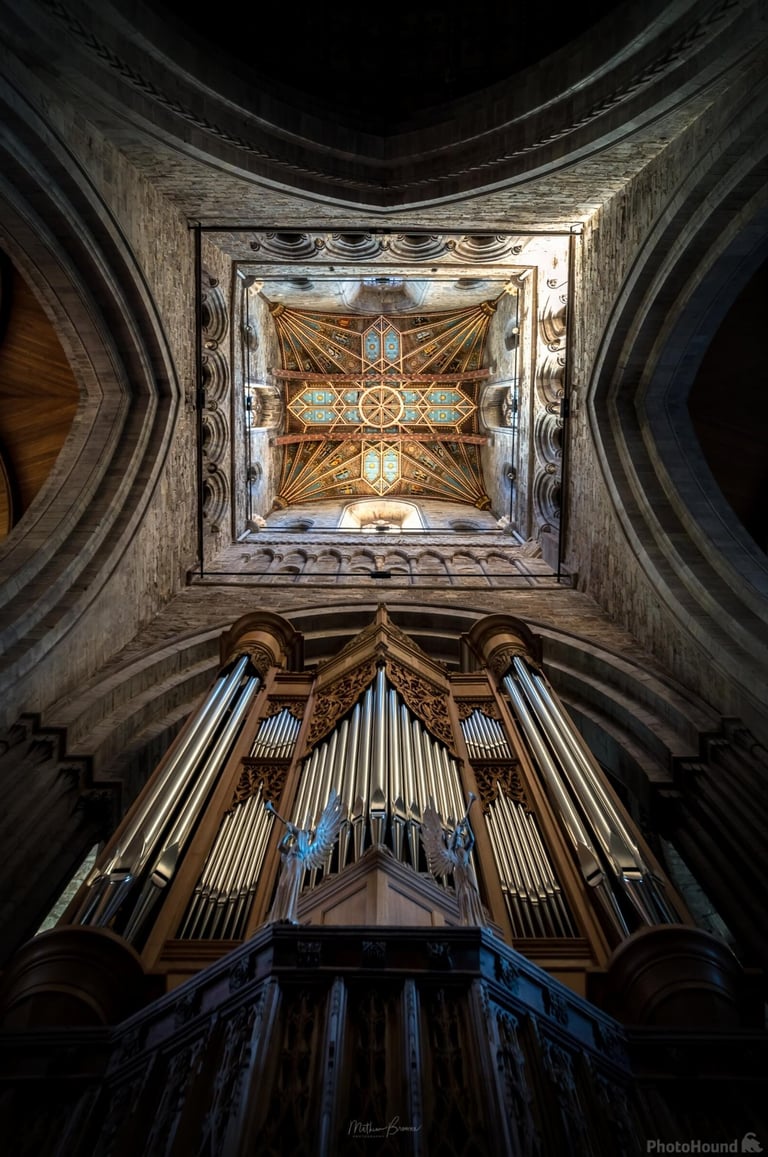
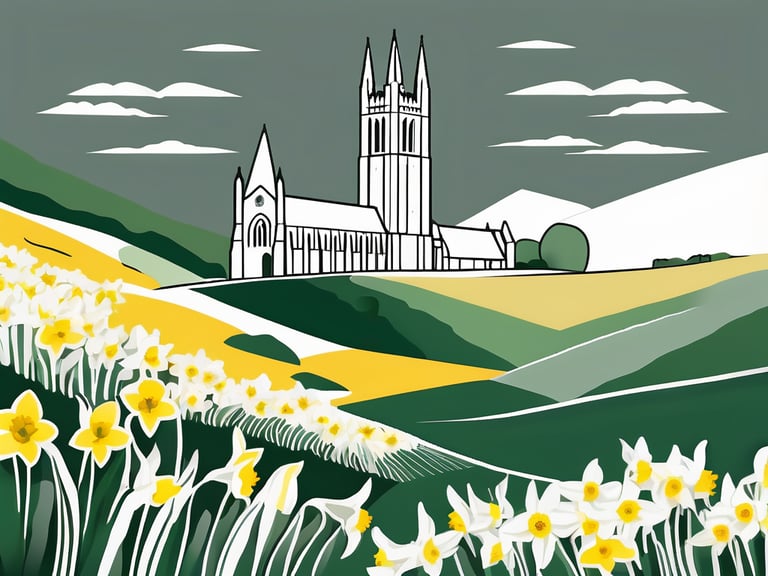
St David, known in Welsh as Dewi Sant, flourished in the sixth century as one of the most influential figures of the Celtic Church. A native of Wales, he was renowned as a teacher, preacher, and monastic founder, establishing communities and churches throughout Wales, Cornwall, Brittany, and beyond.
His principal foundation at Menevia, where St David’s Cathedral now stands in the far west of Pembrokeshire, became a celebrated centre of learning and holiness. The community David gathered there was distinguished by its commitment to radical simplicity. His monks drank only water (earning David the nickname Aquaticus, “The Waterman”), ate only bread with salt and herbs, and pulled the plough themselves without the help of draught animals.
Yet David’s spirituality was never austere for its own sake. His asceticism was rooted in the traditions of the Desert Fathers but tempered with pastoral warmth and deep compassion for the poor and suffering. He was a bishop who served his people with gentleness, a teacher who made the faith accessible, and a leader whose example spoke more powerfully than his words.
Dewi Sant: The Waterman
His Final Words
David’s legacy is captured in the last words he spoke to his community, words that have echoed down the centuries and become the spiritual heart of Wales: “Be joyful, keep the faith, and do the little things that you have heard and seen me do.”
These words, so apparently simple, contain a profound spiritual programme. They speak of joy as the proper disposition of the Christian life, of faith as something to be guarded and lived rather than merely professed, and of holiness as the faithful attention to ordinary duties rather than the pursuit of the spectacular. It is this spirituality of the “little things” (y pethau bychain) that gives the Order of St David its distinctive character.

Our Rule of Life
The Order draws from two great wells of Christian wisdom. The first is the Celtic monastic tradition of St David, with its emphasis on closeness to creation, joyful simplicity, and the awareness of what the Celtic saints called the thin places -- those moments and spaces where heaven seems very close to earth. The second is the Rule of St Benedict, one of the most enduring guides to Christian life ever written, with its gentle wisdom, its balance of prayer and work, and its call to stability and conversion of life.
Together, these two traditions shape a Rule of Life that is practical, grounded, and suited to people living in the modern world.
Prior General
Most Rev Felix Gibbins OSD
prior@orderofstdavid.org
Subscribe to our newsletter
The Order of St David © 2026.
The Order of St David is a Secular Institute of Consecrated Life erected under the Canon Law of the Ancient Apostolic Catholic Church
Prayer to St David
O God, who did call your servant David to be a preacher of the Gospel and a light to the people of Celtic communities, grant that we who honour his memory may follow his example: being joyful in faith, steadfast in hope, and faithful in the little things of daily life. Through the intercession of St David, may we drink deeply from the well of your grace, labour faithfully in your vineyard, and at the last come to that blessed rest where, with him and all your saints, we shall praise you for ever. Through Jesus Christ our Lord, who lives and reigns with you in the unity of the Holy Spirit, one God, world without end. Amen.