
Vows of the Order


ROOTEDNESS (STABILITY
"I pledge to be rooted in the life, prayer, and mission of this Order, remaining constant in fellowship and steadfast in purpose, as St David taught his people to stand firm in the little things."
In the monastic tradition, stability meant remaining physically in one monastery for life. For members of this dispersed Order, Rootedness expresses the same commitment in a form suited to life in the world: it is rootedness in a community of faith, prayer, and mission rather than in a single physical location.
Through this vow, members commit to perseverance in the Order, resisting the temptation to abandon their commitment when difficulties arise. Rootedness is expressed through faithful participation in gatherings, constancy in the spiritual practices of the Rule, maintaining communion with fellow members, and holding steady through seasons of difficulty, doubt, or spiritual dryness.
In an age of constant change and shallow commitments, Rootedness is profoundly counter-cultural. By vowing to remain, members witness to the world that lasting fidelity is possible and that deep roots produce lasting fruit.


FAITHFUL SERVICE (OBEDIENCE)
"I pledge to serve God’s call with humility and steadiness, responding to the guidance of the community and its leaders, and placing the common good above self-will, that Christ may be known and loved."
The Latin word ob-audire means “to listen toward.” Obedience, in the Benedictine understanding, is not blind submission but disciplined attentiveness: a humble openness to God’s will as expressed through Scripture, the Church, the community, and legitimate authority.
Through this vow, members offer their will to God; self-will is set aside so that they may serve God and neighbour with an undivided heart. Far from being restrictive, obedience is paradoxically the path to true freedom, liberating the soul from the prison of self-centredness.
Members owe obedience first to God, then to the Primate as highest superior of the Order, to the Prior General and other legitimate superiors, and to their spiritual director. Clerical members retain their primary obedience to their diocesan bishop. Faithful Service also has a strong communal dimension: members practise mutual obedience within the community, serving one another and deferring to one another in love.
Three Vows, One Consecration
Following the ancient Benedictine tradition, members of the Order of St David profess three vows drawn directly from the Rule of St Benedict: Stability, Conversion of Life, and Obedience. Within the Order, these vows receive distinctively Davidic names that honour the pastoral heritage of St David whilst preserving the full substance and meaning of the Benedictine promises.
Although Benedictines do not vow poverty and chastity as separate promises, those evangelical counsels are fully contained within the vow of Conversion of Life. Chastity is embraced as part of the consecrated way of life; poverty is lived through simplicity and detachment from possessions. The three vows together express a total dedication to God and are professed as a single act of consecration, not as three separate commitments.
WHOLEHEARTED DEVOTION (CONVERSION OF LIFE)
"I pledge to offer my whole life to God’s transforming grace, ordering my relationships, desires, and daily conduct toward Christ, and seeking purity of intention and faithfulness in all my commitments."
This is the most comprehensive of the three vows, corresponding to the Benedictine conversatio morum. It encompasses the entirety of the consecrated life: ongoing conversion of heart, the ordering of all desires toward God, and the embrace of discipline and ascetic practice. Within this single vow, the evangelical counsels of chastity and poverty find their proper place.
Conversion of life is not a one-time event but a lifelong journey of being transformed into the likeness of Christ. It involves daily examination of conscience, regular confession, and the constant effort to grow in virtue. Members commit to continual turning toward God, recognising that perfection lies not in having arrived but in faithfully walking the path.
For celibate members, chastity is expressed through complete continence for the sake of the Kingdom. For married members, chastity is expressed through faithful, loving commitment to their spouse and the sanctification of married life. Married members do not live a lesser form of chastity but express the same virtue in the manner proper to their vocation.
The spirit of poverty is embraced through living simply, being detached from possessions, giving generously, and using material goods as stewards rather than owners. Members continue to own property and receive income, but they hold these things with evangelical freedom and a pilgrim’s awareness that earthly treasure is passing.
The Vows as a Path to Freedom
The three vows are not burdens but pathways to freedom. They liberate the heart from disordered attachments, free the will for wholehearted service of God, and shape the member into the likeness of Christ, who remained steadfast in his mission, devoted himself wholly to the Father’s will, and served unto death. Through these vows, members participate in Christ’s own way of life and become signs of the Kingdom to come.

Our Rule of Life
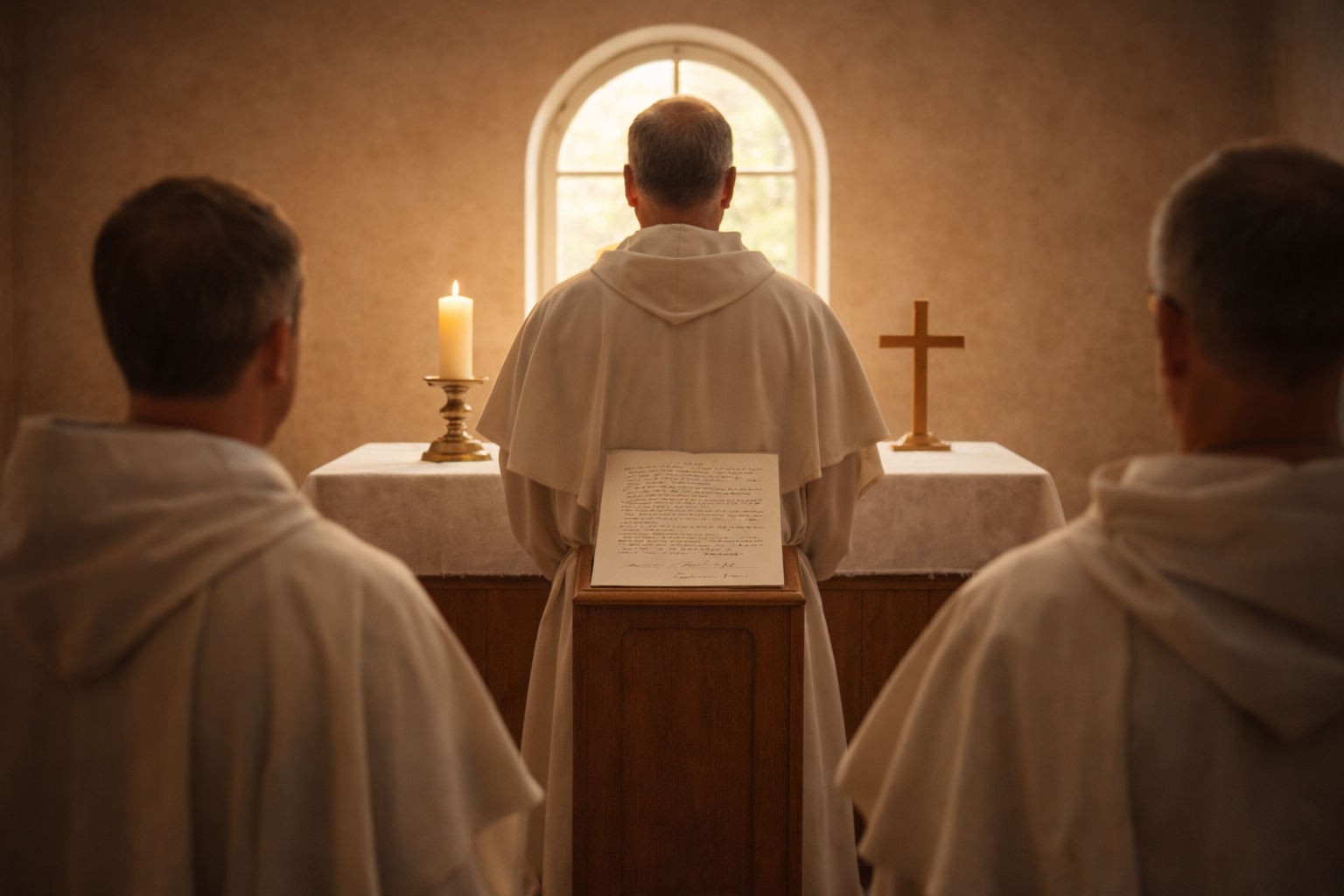
The Order draws from two great wells of Christian wisdom. The first is the Celtic monastic tradition of St David, with its emphasis on closeness to creation, joyful simplicity, and the awareness of what the Celtic saints called the thin places -- those moments and spaces where heaven seems very close to earth. The second is the Rule of St Benedict, one of the most enduring guides to Christian life ever written, with its gentle wisdom, its balance of prayer and work, and its call to stability and conversion of life.
Together, these two traditions shape a Rule of Life that is practical, grounded, and suited to people living in the modern world.


Order of St David © 2026 All Rights Reserved.